
Tag: theory and methods
-
Positivism vs Interpretivism: The Cheat Sheet

When sociologists carry out research, they don’t all agree on how society should be studied. Some believe sociology should work like a science, using facts and figures. Others argue that society can only be understood by exploring people’s meanings and experiences. These two approaches are known as positivism and interpretivism, and they sit at the…
-
Understanding Research Methods in Sociology
When sociologists study society, they don’t just rely on opinions or guesses. Instead, they carry out research to collect evidence about how people behave, think, and interact. This research follows different methods, and those methods are guided by different theories about how society works. If you are studying sociology for the first time, research methods…
-
Sociology on the edge
How researchers study those on the margins of society A lot of sociology happens in places most people don’t see, don’t visit, or would rather not think about: gang territories, homeless encampments, stigmatised sexual cultures, institutions that control people’s lives, and communities under intense surveillance. Researchers go there because that’s often where power shows itself…
-
Media Representations Magazine Project
Learning Goal To show your understanding of how different social groups are represented in the media by creating a magazine-style cover and layout that explores sociological research and theory on representation. Task Overview You will design a magazine front cover and feature page that explores how the media represents different social groups (e.g. gender, ethnicity,…
-
Researching the Uses and Gratifications Model in Media Sociology
When we think about why people consume media, it’s easy to assume that audiences are passive—simply absorbing whatever is broadcast or published. The Uses and Gratifications (U&G) model flips that idea on its head. Instead of focusing on what media does to people, this approach looks at what people actively do with media. Developed in…
-
What is the glass ceiling?

The term glass ceiling describes an invisible barrier that prevents women (and often other under-represented groups) from reaching the highest levels of management or leadership in organisations — even when their qualifications and experience are similar to those of men. Though there are no explicit rules saying “women can’t advance further”, invisible structural, cultural and…
-
Exploring Youth Subcultures through Digital Ethnography
Introduction In today’s digital world, much of youth culture exists online. From TikTok aesthetics to Reddit fan communities, young people use digital spaces to express their identities, share values, and sometimes resist mainstream norms. For sociologists, studying these online communities is vital to understanding contemporary youth subcultures. This is where digital ethnography comes in —…
-
Unlocking Sociology: Why your vocabulary is your most powerful tool
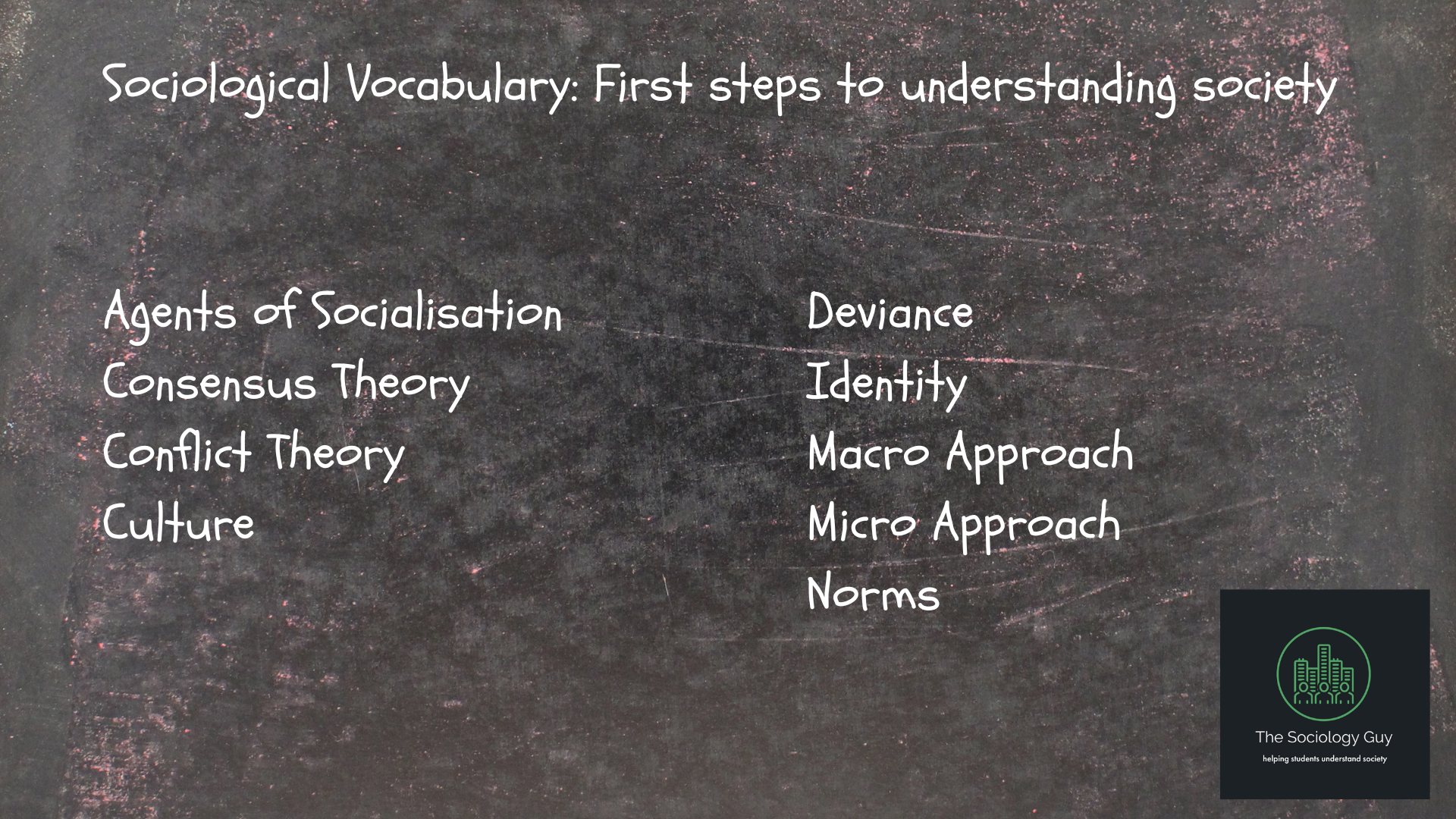
Starting A-Level Sociology can feel a little overwhelming. Suddenly, you’re not just learning about the world; you’re using a specific set of tools and a new language to deconstruct it. Concepts like ‘culture,’ ‘socialisation,’ and ‘consensus theory’ are the building blocks, and mastering them is the first step towards success. Why is this so important?…
-
Sample Family Survey Questionnaire

Sociologists often use surveys to study family life because they allow researchers to collect information from large numbers of people and identify patterns. For example, the UK Census is conducted every ten years and provides detailed data on household types, living arrangements, and family size. Similarly, the British Social Attitudes Survey regularly asks the public…
-
The Evolution of Neo-Marxism
Marxism, as developed by Karl Marx, focused on how capitalism exploits workers and how class conflict drives social change. But by the mid-20th century, some sociologists and philosophers began to argue that traditional Marxism needed updating. This is where Neo-Marxism comes in. What is Neo-Marxism? Neo-Marxism keeps Marx’s concern with inequality, exploitation, and capitalism, but…