
Celebrating Black History Month: The Contribution of Black and Ethnic Minority Sociologists to UK Sociology
Every October, the UK marks Black History Month – a time to celebrate the achievements, culture, and history of Black communities. It is also an opportunity to reflect on the profound contributions of Black and ethnic minority sociologists to our collective understanding of UK society. In sociology, these contributions have been transformative, challenging Eurocentric narratives, highlighting structural inequalities, and reshaping how we understand race, identity, and culture.
Black and ethnic minority sociologists have played a vital role in making UK sociology more inclusive, critical, and reflective of a multicultural society. Figures such as Stuart Hall, Heidi Mirza, Paul Gilroy, Tariq Modood, Tracey Reynolds, Gurminder Bhambra, and others have not only produced groundbreaking research but also inspired generations of students and academics to interrogate social hierarchies, representation, and power. This Black History Month, it is fitting to celebrate their work and understand how it continues to shape UK sociology.
Stuart Hall: Cultural Studies and Race in the UK
Perhaps one of the most celebrated Black sociologists, Stuart Hall, was a foundational figure in British cultural studies. Born in Jamaica in 1932, Hall migrated to the UK and co-founded the Centre for Contemporary Cultural Studies (CCCS) at the University of Birmingham. Hall’s work focused on media, culture, and identity, examining how popular culture reflected and reinforced power structures in society.
Hall’s contribution to sociology lies in his exploration of race and representation. He argued that race is not a fixed biological category but a socially constructed phenomenon, shaped by historical, political, and economic contexts. Hall’s essays on ‘new ethnicities’ and identity formation remain central to contemporary discussions of multiculturalism in the UK. His work highlighted how Black and minority communities negotiate their identities in a society structured by racial hierarchies, making him a trailblazer for critical race theory in British sociology.

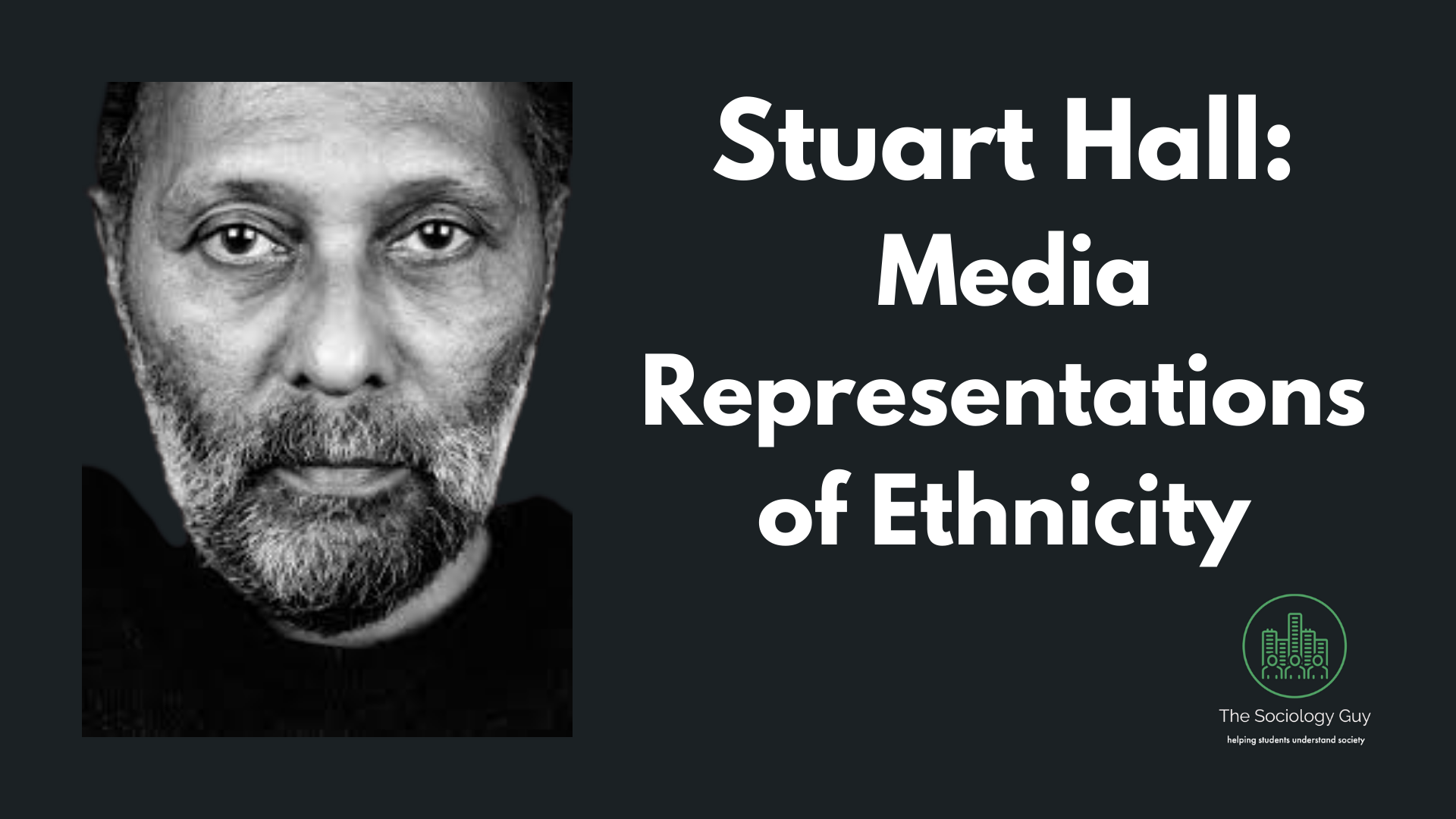
Hall’s work is commonly used in both analysis of crime and deviance and the media. Below is a PPT of his ideas on media representations of ethnic minority groups.
Heidi Mirza: Intersectionality and Education
Heidi Safia Mirza, a leading sociologist and educational researcher, has made significant contributions to understanding race, gender, and identity in education. Mirza’s research examines the experiences of Black and Asian women in the UK, highlighting how intersecting forms of discrimination shape life chances.
In her seminal work, Black British Feminism: A Reader, Mirza explores the ways institutional racism and sexism affect educational attainment and professional opportunities. She has been critical of how schools and universities can reproduce inequality, emphasizing the importance of culturally responsive teaching and inclusive policies. Mirza’s research challenges structural inequalities while validating the experiences of minority students, inspiring policy changes in education.
Mirza is often used when looking at ethnic differences in education, both through her work on teachers racialised expectations and collaborations with David Gillborn.


My colleague, the brilliant Katie Tyler, over at tutor2u recently interviewed Heidi Mirza for the podcast The Sociology Staffroom, which you can view here.

Paul Gilroy: The Black Atlantic and Identity
Paul Gilroy, a sociologist and cultural theorist, is best known for his influential book The Black Atlantic: Modernity and Double Consciousness. Gilroy examines the transnational experiences of Black people, connecting historical slavery, colonialism, and migration to contemporary issues of race and identity.
Gilroy challenges nationalist perspectives on culture and identity, arguing that Black diasporic communities in the UK and beyond form complex hybrid identities. His work highlights the cultural contributions of Black communities while critiquing social and political marginalisation. By framing race and identity as fluid and interconnected across borders, Gilroy expanded the horizons of UK sociology and challenged ethnocentric narratives about British society.
Gilroy’s work is often cited in both the study of culture, identity and crime and deviance. Below is a summary of his work – Black Atlantic

Tariq Modood: Multiculturalism and Integration
Professor Tariq Modood has focused on ethnic diversity, integration, and the sociology of religion. His research addresses how multiculturalism operates in the UK. Modood has critically evaluated government policies on race and integration, arguing for recognition of cultural difference while promoting social cohesion.
Modood’s work on ethnicity and identity has shaped debates about multiculturalism, citizenship, and religious diversity. His research highlights that ethnic minority communities are not passive subjects of policy but active participants in shaping British society. By combining empirical research with theoretical insights, Modood provides policymakers and sociologists with a nuanced understanding of multicultural Britain.
Modood is often covered across sociology courses, looking at culture, family life, and education amongst others. Below is a worksheet on Modood et al’s research Changing Ethnic Identities (1994)

Tracey Reynolds: Family, Health, and Inequality
Tracey Reynolds has made important contributions to the sociology of family, health, and inequality, particularly in relation to Black and ethnic minority communities. Her research examines how social and structural inequalities shape family life, parenting, and child development.
A central focus of Reynolds’ work has been on family life and kinship within Caribbean and other minority ethnic communities in Britain. She has highlighted how ideas of family go beyond the traditional nuclear model, showing the importance of extended kin networks, intergenerational support, and transnational connections that link families across national borders. This perspective challenges dominant cultural assumptions about what “counts” as family and gives recognition to the diverse forms of family life present in multicultural Britain.
Reynolds emphasizes that family dynamics cannot be understood in isolation from broader social forces such as poverty, racism, and policy frameworks. For example, she shows how structural inequalities shape parenting practices and household strategies, while also demonstrating the resilience and agency of minority families in adapting to and resisting these pressures.
Her work highlights the importance of moving beyond deficit-based narratives that often stereotype minority families as “problematic” or “dysfunctional.” Instead, she demonstrates the strengths, creativity, and solidarity within these communities. In doing so, Reynolds contributes to a sociology that recognizes diversity while critiquing inequality, making her research vital to debates on family, race, and social justice in the UK
Reynolds is currently Professor of sociology at Greenwich University and you can find out more about her work and influence by clicking here.

Gurminder Bhambra: Postcolonial Sociology, Knowledge, and Leadership
Professor Gurminder Bhambra is a leading voice in postcolonial sociology. She has critically interrogated mainstream sociological narratives, arguing that the discipline has often ignored the legacies of colonialism in shaping modern societies. Bhambra emphasizes that understanding social structures, inequality, and identity in the UK requires acknowledging historical connections to empire, migration, and global power dynamics.
In addition to her research, Bhambra has played a key role in shaping UK sociology through her involvement with the British Sociological Association (BSA). She served as President of the BSA, using her leadership to promote diversity and inclusion within the discipline. Through this platform, she has advocated for decolonising sociology, supporting the work of minority academics, and highlighting the importance of global and historical perspectives in sociological research.
Her work challenges Eurocentric assumptions in sociology and advocates for a more historically grounded, globally aware approach to studying society. Bhambra’s contributions demonstrate that scholarship and leadership together can reshape both knowledge production and the institutions that support it.
A link to the Sociology Review Article on her appointment as President of The BSA is here.
Other Influential Figures
In addition to the sociologists already discussed, several other Black and ethnic minority scholars have significantly shaped UK sociology:
Kalwant Bhopal studies race, education, and social mobility, particularly focusing on how structural inequalities affect ethnic minority students and staff in higher education.
Feyisa Demie focuses on educational attainment, school inequalities, and the barriers faced by minority ethnic students in the UK education system.
Sarita Malik has made influential contributions to understanding race, migration, and media representation. In her 2002 work, Malik examines how ethnic minority communities are portrayed in British media, highlighting patterns of stereotyping, underrepresentation, and exclusion. Her research emphasizes the role of media in shaping public perceptions of race and identity, and how these representations intersect with broader social inequalities.
Claire Alexander investigates focuses on race, ethnicity and identity. She is especially known for studying how young British Asian and Black people experience racism and create their own cultural identities. Her book The Art of Being Black explored the experiences of young Black men in Britain, while later work looked at Asian youth and how stereotypes (like the “gang” label) affect them. Alexander has also written about race and representation in the media, and how colonial histories shape ideas about identity today.
Additional sociologists (with thanks to Juliet Jools for the suggestions)
Jason Arday is one of the youngest people ever appointed as a Professor at the University of Cambridge. His work focuses on race, education and social justice. He has written about the barriers faced by Black students and academics in higher education, and how universities can become more inclusive. Arday is also open about being diagnosed with autism and learning difficulties as a child, and how he overcame challenges to succeed in academia.
You can see Professor Arday discuss his path with Autism Today in the following video clip.
Kehinde Andrews is a Professor of Black Studies at Birmingham City University and the UK’s first professor in this subject. He is a leading voice in debates about race, racism, and the legacies of slavery and colonialism. His books, such as The New Age of Empire, argue that racism is not just about individuals, but built into the structures of society. Andrews is also a public speaker and activist who challenges Eurocentric perspectives in education and promotes Black Studies as a discipline.
Ali Meghji looks at race, class and culture, and he is especially interested in how race and racism operate in everyday life. Meghji has written about “decolonising sociology” – making the subject more inclusive of different voices and perspectives. He also studies how cultural tastes, social class, and racial inequalities are linked. Meghji represents a younger generation of sociologists pushing for sociology to address issues of power and inequality more directly. Meghji was recently interviewed by The Sociological Review, an article you can read here
Cecile Wright explores race, identity, and education, with a focus on how ethnic minority students navigate schooling and develop strategies of resilience in contexts of inequality and discrimination. Her work highlights the importance of cultural identity and social networks in shaping educational experiences. A link to Wright discussing her work of The Sociology Show is here:
Clicking on the names of the researchers will take you to their respective university profiles where available.
The contributions of Black and ethnic minority sociologists have profoundly shaped the study of society in the UK. From Stuart Hall’s pioneering work on cultural identity to Heidi Mirza’s research on race and education, from Paul Gilroy’s explorations of diaspora to Tracey Reynolds’ insights into family life, these scholars have challenged dominant narratives and broadened our understanding of inequality, identity, and social justice.
Their work demonstrates that sociology cannot be fully understood through a single lens. By including diverse voices and perspectives, the discipline becomes more reflective, critical, and socially relevant. Academics such as Gurminder Bhambra, Sarita Malik, Cecile Wright, and Feyisa Demie illustrate how attention to race, culture, media, and education provides essential insights into the lived experiences of minority communities, while also challenging structural inequalities.
Celebrating these contributions during Black History Month is not only a recognition of individual achievement but also a reminder of the vital role diversity plays in enriching sociological knowledge. Inclusive sociology ensures that the study of society reflects the complexities, inequalities, and richness of the world we live in, preparing future scholars to engage thoughtfully and critically with an increasingly diverse and interconnected society. And furthermore, it reminds your students that despite the barriers that exist, anything is possible.
Leave a Reply