 by
by 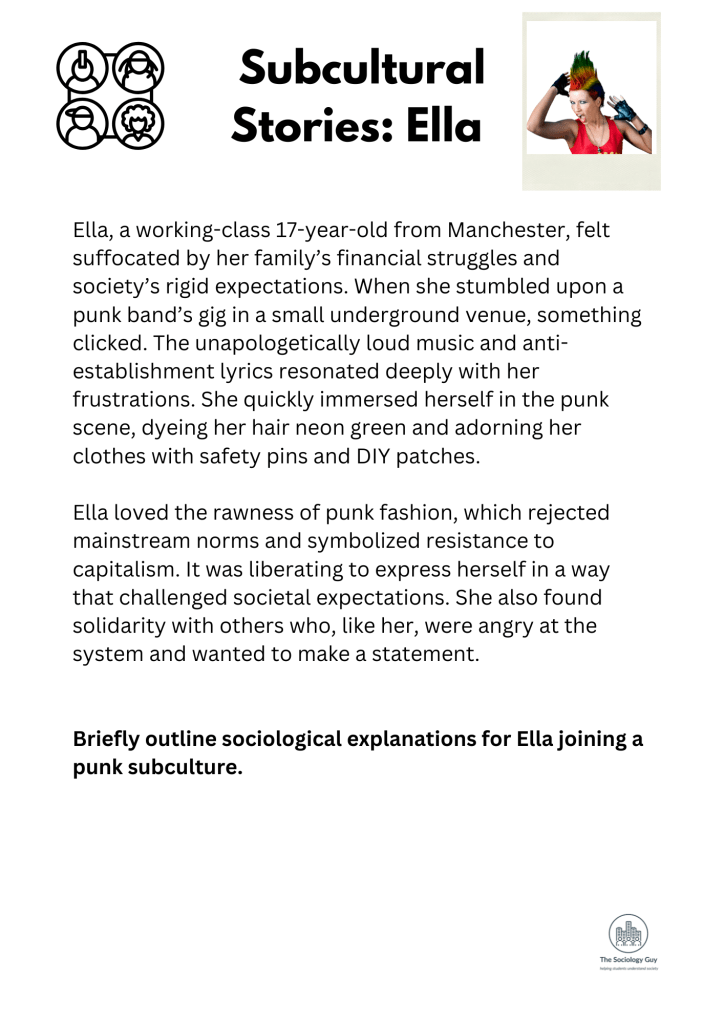




Youth subcultures have long fascinated sociologists, from the Mods and Rockers of the 1960s to more contemporary scenes like Grime or Emo. This teaching activity, Subcultural Stories, offers students the chance to engage with real-world examples of young people navigating identity, class, ethnicity, and resistance through their subcultural affiliations.
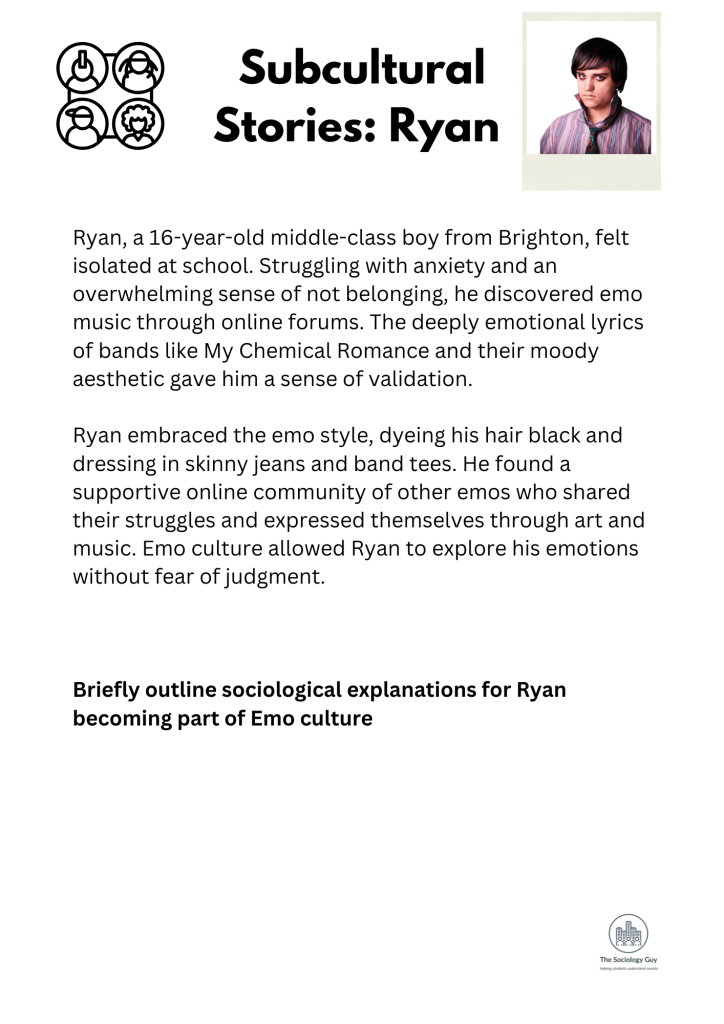
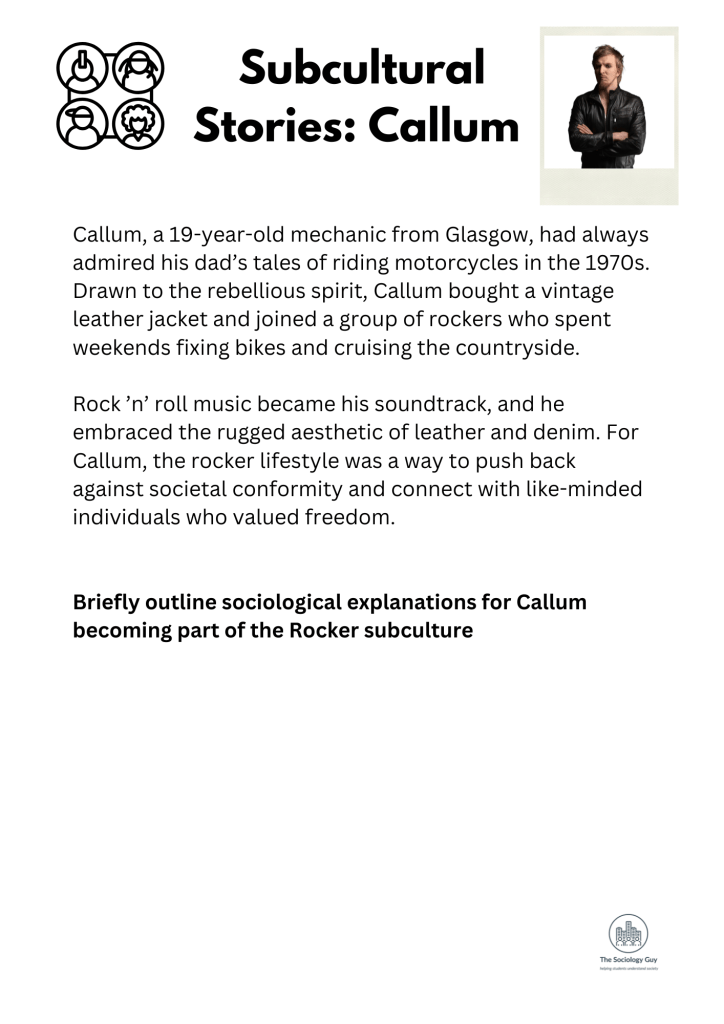
The resource presents students with short fictionalised case studies of young people—Ella (punk), Ryan (emo), Aisha (goth), Jamie (mod), Callum (rocker), Mia (raver), and Darnell (grime). Each vignette captures the cultural styles, values, and motivations behind their subcultural participation. Students are then asked to briefly outline sociological explanations for each character’s involvement.
How to Run the Activity
- Introduce Subcultural Theory
Begin with a recap of key perspectives on youth subcultures:- Marxist/Neo-Marxist views (e.g., CCCS/Birmingham School): subcultures as resistance to capitalism and class inequality.
- Postmodernist views: fluid, hybrid, and playful identities (e.g., club culture, rave, online scenes).
- Functionalist views: subcultures as providing belonging, status, and coping mechanisms during social transitions.
- Feminist views: critique of the male bias in subcultural research and recognition of female voices.
- Distribute the Subcultural Stories
Students read through the case studies individually or in small groups. - Task
For each character, students must:- Identify possible sociological explanations for their subcultural involvement.
- Link to theories, concepts, or studies (e.g., Hebdige on style, Maffesoli on neo-tribes, Cohen on status frustration).
- Consider intersections of class, gender, and ethnicity where relevant.
- Discussion/Feedback
Encourage students to share responses and debate:- To what extent do these stories reflect resistance vs. escapism?
- Do traditional theories still apply, or are postmodern explanations more convincing today?
- How do online communities reshape subcultural belonging?
You can download the activity here:
Why This Works Well
This activity encourages students to:
- Apply theory to case studies in a clear, structured way.
- Recognise diversity within youth subcultures.
- Develop critical thinking about how traditional theories interact with contemporary youth experiences.
Teachers can extend this activity by asking students to research a subculture of their own choice, or even write their own “Subcultural Story” to share with peers.
Suggested Responses (Examples for Teachers)
- Ella (Punk):
- Neo-Marxist view: punk as symbolic resistance to capitalism and class oppression (Hebdige).
- Expression of working-class frustration through style and music.
- Ryan (Emo):
- Functionalist view: coping with isolation and anxiety; provides belonging and support.
- Postmodern view: identity exploration through online subcultural communities.
- Aisha (Goth):
- Postmodern: hybridity of goth style with her cultural heritage (neo-tribes).
- Feminist perspective: subculture as space for individuality and gender expression.
- Jamie (Mod):
- Functionalist: subculture as a way to gain status and aspiration.
- Neo-Marxist: upward mobility through style and consumption (resisting working-class identity).
- Callum (Rocker):
- Marxist/CCCS: rebellion against conformity and middle-class values.
- Links to masculinity and working-class resistance.
- Mia (Raver):
- Postmodern: rave as fluid, temporary, collective identity (Maffesoli’s neo-tribes).
- Escapism from exam stress and parental pressure.
- Darnell (Grime):
- Marxist: resistance to racism, inequality, and deprivation.
- Cultural criminology: grime as a form of creative resistance and self-expression.
 The Sociology Guy
Leave a comment