 by
by Stanley Cohen and the Study of Folk Devils and Moral Panics
One of the most influential contributions to sociology in the 20th century comes from Stanley Cohen, particularly his work on folk devils and moral panics. Cohen’s research helps us understand not only how society reacts to perceived threats but also how deviance is socially constructed and how media can intensify social anxieties. His work remains central to sociological study, especially for students exploring youth culture, social control, and the role of media in shaping public perception.
Cohen’s Study: Mods and Rockers
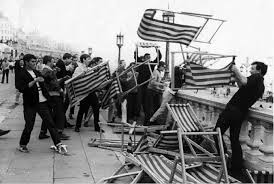
Cohen’s most famous work, Folk Devils and Moral Panics (1972), focused on the clashes between two youth subcultures in the UK during the 1960s: the Mods and the Rockers. These groups had distinct styles and lifestyles: Mods were fashion-conscious, wore sharp suits, rode scooters, and listened to modern jazz or pop music; Rockers wore leather jackets, rode motorbikes, and preferred rock and roll.
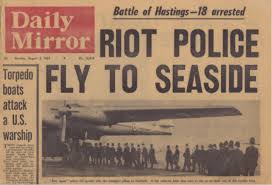
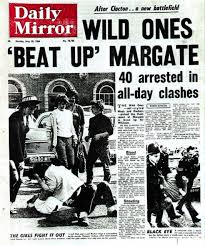
During bank holidays, these groups occasionally clashed in seaside towns, such as Brighton, Margate, and Clacton. While the incidents themselves were relatively minor, newspapers sensationalised them, presenting the clashes as evidence of a wider breakdown in social order. Cohen observed that the media framed the youth as folk devils—outsiders threatening the values and norms of society. This media portrayal triggered a moral panic, where public anxiety and moral outrage were far greater than the reality of the events.
Cohen’s study is significant because it illustrates how deviance is not inherent in an act but socially constructed. The Mods and Rockers were not inherently more violent than other youths, but the way society and the media reacted turned them into symbols of social disorder. This demonstrates the interaction between behaviour, media representation, and public perception—a relationship that remains highly relevant today.
Cohen’s Methodology
Cohen’s research employed a primarily qualitative approach, allowing him to explore the meanings and social constructions behind events rather than relying solely on numerical data. Key elements of his methodology included:
- Content analysis of newspaper articles: Cohen examined how newspapers exaggerated the scale of incidents and used emotive language to provoke moral outrage.
- Secondary sources, such as police reports, court records, and eyewitness accounts, to compare media portrayals with the reality of events.
Through this approach, Cohen demonstrated that deviance is constructed through social reaction. His work bridged the study of media effects and sociology of deviance, showing that the media is not just a passive reporter of events but an active participant in shaping social reality.
Key Concepts
Several concepts from Cohen’s study remain central to understanding deviance and social reaction:
- Folk Devils – Groups or individuals labelled as threats to social norms, often scapegoated for wider societal problems. Examples include Mods and Rockers in the 1960s, but also contemporary groups such as “gangs,” “anti-vaxxers,” or online influencers in moral panics.
- Moral Panic – A disproportionate public reaction to a perceived social threat, often amplified by media coverage. Moral panics typically involve three elements: heightened public concern, hostility toward the group identified as the threat, and a consensus that action should be taken.
- Deviancy Amplification Spiral – The cyclical process in which media exaggeration leads to public concern, which can provoke further deviant behaviour, prompting more media coverage, and so on. This spiral explains how minor incidents can escalate into widespread social anxiety.
Evaluations and Criticisms
Cohen’s work has been widely influential but is not without critique.
Strengths:
- Highlights the active role of media in shaping social perceptions of deviance.
- Shows how society constructs social problems rather than simply reacting to objective realities.
- Provides a framework for analysing youth culture, public policy, and social control.
- Influenced later sociological research, including studies on immigration, terrorism, and online communities.
Criticisms:
- Cohen may overemphasise media influence, overlooking structural factors like poverty, inequality, or marginalisation that contribute to youth deviance.
- Not all moral panics escalate; sometimes public concern fades without major social consequences.
- Feminist critiques argue that Cohen’s focus on male youth neglects gendered aspects of moral panics, such as societal anxieties about women’s behaviour or sexual morality.
- The study is historically specific, focusing on a 1960s UK context; some critics argue that contemporary digital media environments require adaptation of his concepts.
Subsequent Research Influenced by Cohen
Cohen’s ideas shaped decades of sociological research, influencing the study of youth, media, and social reaction:
- McRobbie and Thornton (1995) explored moral panics in youth culture, developing the idea of moral regulation, which focuses on how society monitors, disciplines, and seeks to control young people.
- Studies on immigration, terrorism, and social media frequently apply Cohen’s framework to understand how certain groups are scapegoated in public discourse.
- Labelling theory is closely linked to Cohen’s work, showing how media portrayal and public reaction can reinforce deviant identities.
Contemporary Applications
Cohen’s work remains highly relevant today because moral panics continue to emerge, now shaped by digital media and globalisation.
- Social Media and Youth Culture
Platforms such as TikTok, Instagram, and X/Twitter can amplify moral panics almost instantly. Stories about “dangerous online challenges,” gaming culture, or influencer behaviour often exaggerate risks, generating deviancy amplification spirals. Public concern may lead to calls for parental controls, school policies, or government intervention, echoing Cohen’s original observations of media influence. - Immigration and Refugees
Politicians and media outlets sometimes portray immigrant groups as threats to national identity, framing them as folk devils. Moral panics around migration can influence policy, fuel xenophobia, and create social tension. Examples in the UK include media coverage of refugees or asylum seekers, where fear is often amplified relative to actual risks. - Terrorism and Crime Panics
After high-profile attacks or criminal incidents, media coverage frequently exaggerates the risk to society, creating widespread fear. This aligns with Cohen’s ideas: the event itself may be minor, but social reaction is magnified, influencing policing and public policy. - Public Health Panics
During the COVID-19 pandemic, misinformation and sensationalist media coverage caused moral panics around vaccination, mask-wearing, and virus transmission. Folk devils were often framed as “anti-vaxxers” or “rule-breakers,” while exaggerated coverage contributed to social anxiety and behavioural policing. Cohen’s framework is highly useful for analysing these phenomena. - Online Misinformation and Conspiracy Theories
Digital platforms allow fringe ideas to gain mainstream attention. Groups spreading conspiracy theories—such as QAnon or anti-lockdown activists—can become modern folk devils. This demonstrates how Cohen’s concepts apply in the digital age, where amplification is accelerated and global. - Youth Subcultures and Moral Regulation Today
Beyond social media, contemporary youth subcultures—such as gamers, festival-goers, or online communities—can still be portrayed as threats to societal norms. Police campaigns, local news, and social media influencers can play a role in amplifying moral panic, showing the continued relevance of Cohen’s study for understanding youth regulation.
Linking Cohen to Broader Sociological Theory
Cohen’s work is part of the interactionist perspective, which emphasises how society constructs meanings rather than responding to objective realities. It also intersects with:
- Labelling theory (Becker, 1963) – Media and societal reactions can label individuals or groups as deviant, reinforcing deviant behaviour.
- Social constructionism – Deviance is not inherent but shaped by social perception and power dynamics.
- Cultural criminology – Examines how media, symbolism, and social anxieties contribute to the perception of crime and deviance.
By integrating Cohen with these theories, students can understand how deviance, media, and social control interact in both historical and contemporary contexts.
Conclusion
Cohen’s study of Mods and Rockers remains a cornerstone of sociological understanding of deviance, media, and public reaction. While his work has been critiqued for overemphasising media influence and neglecting structural or gendered factors, his concepts of folk devils, moral panics, and the deviancy amplification spiral continue to illuminate the social construction of deviance.
From youth subcultures to immigration debates, terrorism coverage, public health crises, and online misinformation, Cohen’s ideas provide a powerful framework for analysing the complex interaction between media, public perception, and social control. For sociology students, his work offers both historical insight and practical tools for understanding contemporary social issues, showing that moral panics are not relics of the past—they are an enduring feature of modern society.
You can hear me talk about Cohen’s work for Tutor2u by clicking on the video below:
Additionally, there is a video of various clips taken from around the time, in this classic video from the Open University below.
 The Sociology Guy
Leave a comment