 by
by 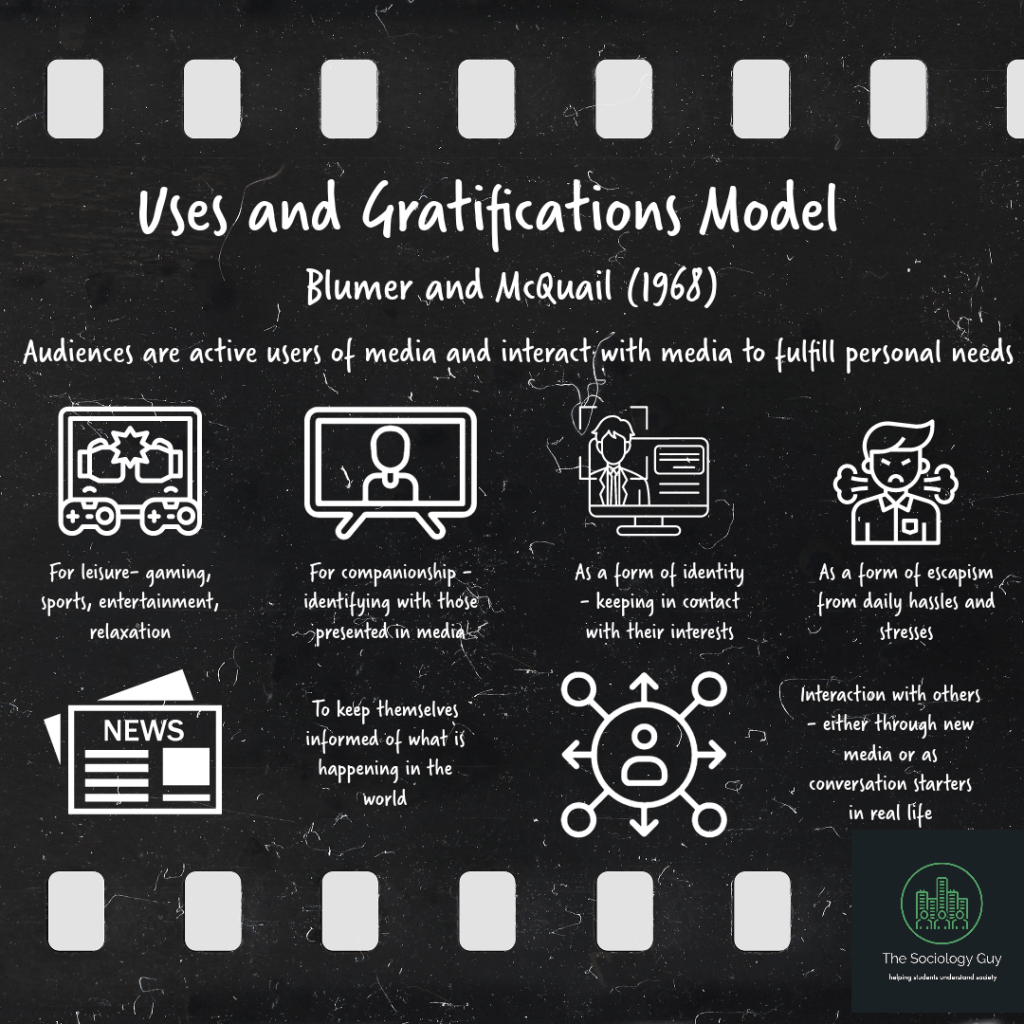
When we think about why people consume media, it’s easy to assume that audiences are passive—simply absorbing whatever is broadcast or published. The Uses and Gratifications (U&G) model flips that idea on its head. Instead of focusing on what media does to people, this approach looks at what people actively do with media. Developed in the 1970s by sociologists like McPhail, Blumer, and Gurevitch, the model argues that media consumption is purposeful and driven by individual needs.
People use media to satisfy a variety of personal and social needs. These are often categorised as:
- Cognitive needs – seeking information, knowledge, or understanding. For example, watching the news to stay informed.
- Affective needs – seeking emotional experiences, such as enjoyment, pleasure, or escapism through films, TV shows, or music.
- Personal integrative needs – enhancing credibility, confidence, or status by consuming media that aligns with personal identity or values.
- Social integrative needs – strengthening relationships by sharing media experiences with friends, family, or online communities.
- Tension release needs – reducing stress or boredom through entertainment or relaxation.
The model is valuable for sociologists because it recognises that audiences are active participants. Media isn’t simply “broadcasting messages” to passive consumers; people make conscious choices based on what they want or need at a particular time.
Measuring Uses and Gratifications in Research
Sociologists interested in U&G often combine quantitative and qualitative methods to explore media use. Surveys and questionnaires are common for measuring patterns of consumption and the motivations behind them. Researchers might ask participants to rate how often they use different types of media, or how strongly they agree that media helps them fulfill certain needs.
Interviews or focus groups can add depth by exploring why individuals use media in specific ways, revealing the personal or social gratifications that a standard survey might miss. Observational studies, content diaries, or digital tracking can also help sociologists understand actual media use rather than just self-reported behaviours.
By combining these methods, researchers can begin to map the complex ways media interacts with everyday life, showing that media use is never random—it reflects human needs, social contexts, and personal motivations.
If you’re interested in exploring this for yourself, you can measure your own media habits and the ways you seek gratification by completing this short questionnaire I’ve put together for students. It’s designed to show how different media sources meet different needs in your daily life. Simply print off as many copies as required and administer to friends. You should then try and collate this information in an appropriate format (charts, tables or graphs).
 The Sociology Guy
Leave a comment