The 1970s in Britain is often described as a period of crisis of hegemony. Antonio Gramsci used the concept of hegemony to explain how ruling classes maintain power not only through force, but by persuading society to accept their leadership as “common sense.” When governments lose that authority, society becomes unstable, and people begin searching for alternatives.
In Britain, the 1970s were marked by a breakdown of the post-war consensus: industrial conflict, economic shocks, political weakness, violent conflict in Northern Ireland, and racial tensions all undermined confidence in the state. Youth subcultures became one of the most visible ways young people reflected and resisted this crisis.
Early 1970s: Industrial Conflict and Economic Instability
The decade began with Edward Heath’s Conservative government (1970–74). Britain’s economy was already struggling, with inflation rising and traditional industries like coal in decline.
In 1972, the miners staged a massive strike, shutting down coal production. To conserve electricity, the government introduced the three-day week in 1974. This gave trade unions unprecedented power to challenge the state.
Youth subcultures reflected this atmosphere of working-class militancy. The Skinheads, for example, emerged from young working-class men in industrial areas. Their style (boots, cropped hair, braces) and aggressive masculinity symbolised pride in working-class identity at a time when jobs and communities were under threat. Clarke (1976) argued skinheads were trying to “magically recover” a sense of working-class community that was being eroded by deindustrialisation.
1973–74: The OPEC Oil Crisis
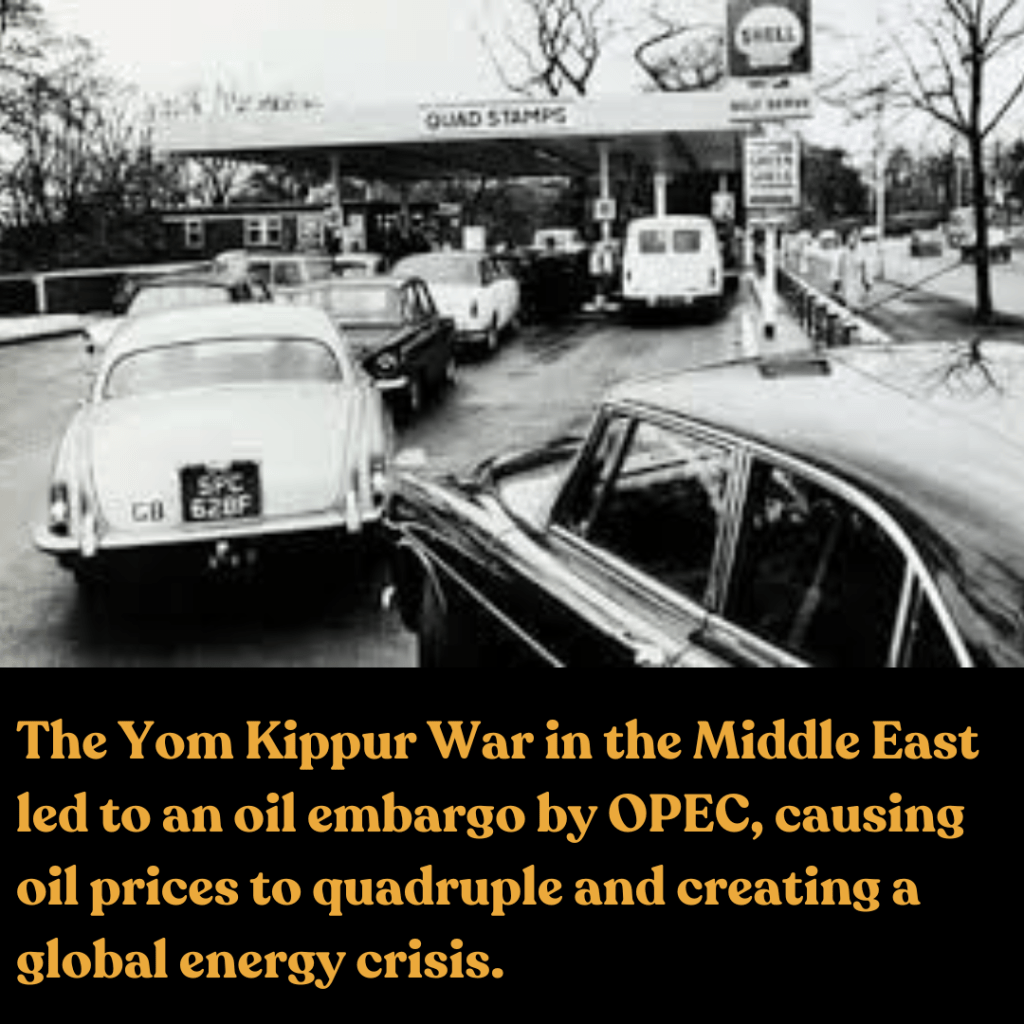
The OPEC oil crisis of 1973 worsened economic instability. Prices quadrupled, inflation soared, and unemployment rose sharply. Everyday life was disrupted by petrol shortages and spiralling costs of living.
Young people, facing bleak job prospects, increasingly turned to alternative identities in music and fashion. For example, early glam rock and later punk cultures highlighted disillusionment with consumer society. Punk’s DIY ethic — making clothes from scraps, using safety pins, rejecting mainstream fashion — was a way of expressing frustration with economic decline and the failure of consumer capitalism to deliver security. Hebdige (1979) described punk style as “resistance through rituals”, symbolically challenging dominant values.
1974: Political Instability and the “Who Governs?” Election
When Heath called the 1974 election under the slogan “Who governs Britain?”, the result was inconclusive. A minority Labour government under Harold Wilson followed, but it was weak from the start.
This political vacuum fuelled a sense of ungovernability, and young people expressed cynicism through subcultures. Mods and skinheads clashed on seaside resorts, becoming the focus of media-driven moral panics (Cohen, 1972). These conflicts mirrored wider concerns about law and order, as the state appeared unable to control either workers or youth.
Mid-1970s: The Troubles in Northern Ireland
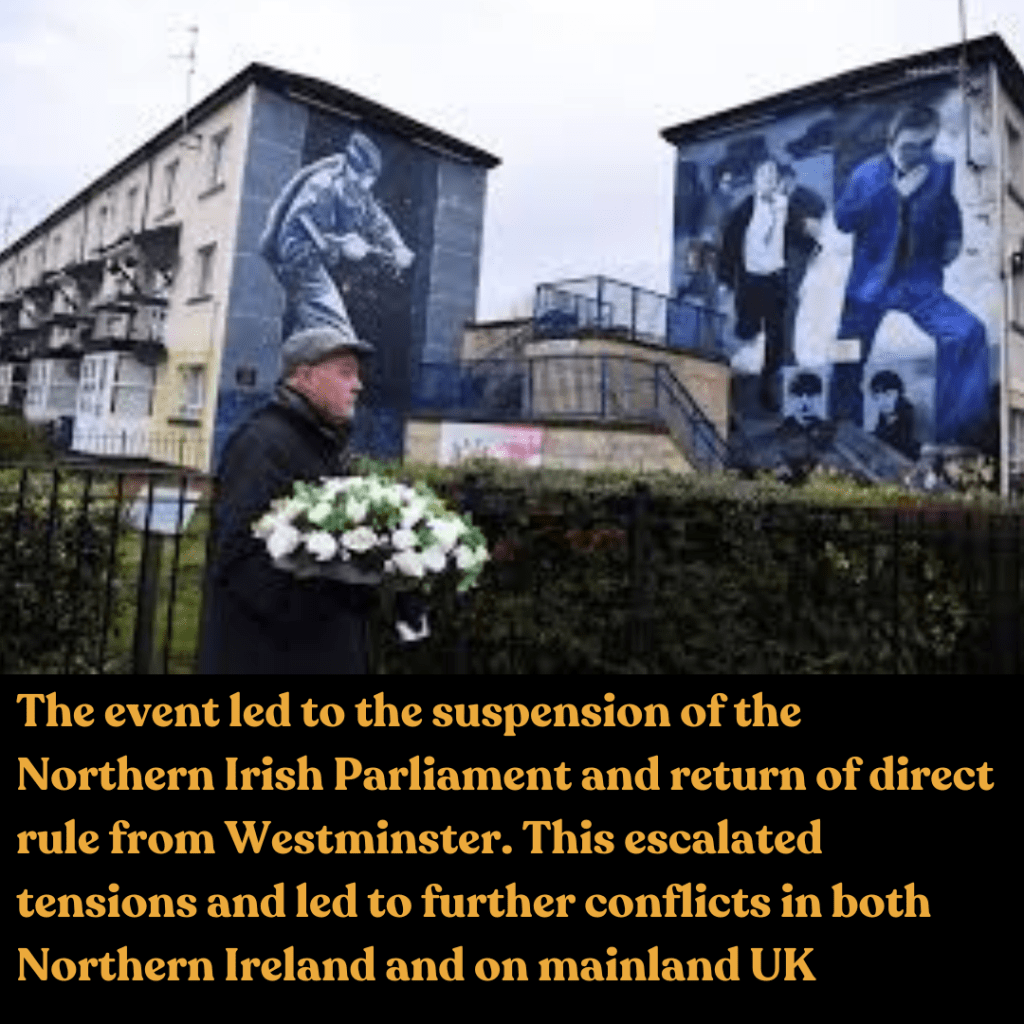
The Troubles escalated during the 1970s, with the British Army deployed and violence intensifying. “Bloody Sunday” in 1972, when British soldiers killed 14 civil rights marchers in Derry, left deep scars. Bombings and shootings spread to Britain itself, with IRA attacks on the mainland.
Youth subcultures in Northern Ireland were shaped by this sectarian divide. Many Catholic and Protestant youths were drawn into paramilitary-linked groups. Even outside Northern Ireland, British youth were affected. The violence fuelled a culture of disillusionment, reflected in punk’s nihilistic slogans like “No Future.” Punks expressed anger not just at unemployment, but also at political violence and the failure of the British state to provide stability.
1976: The IMF Loan
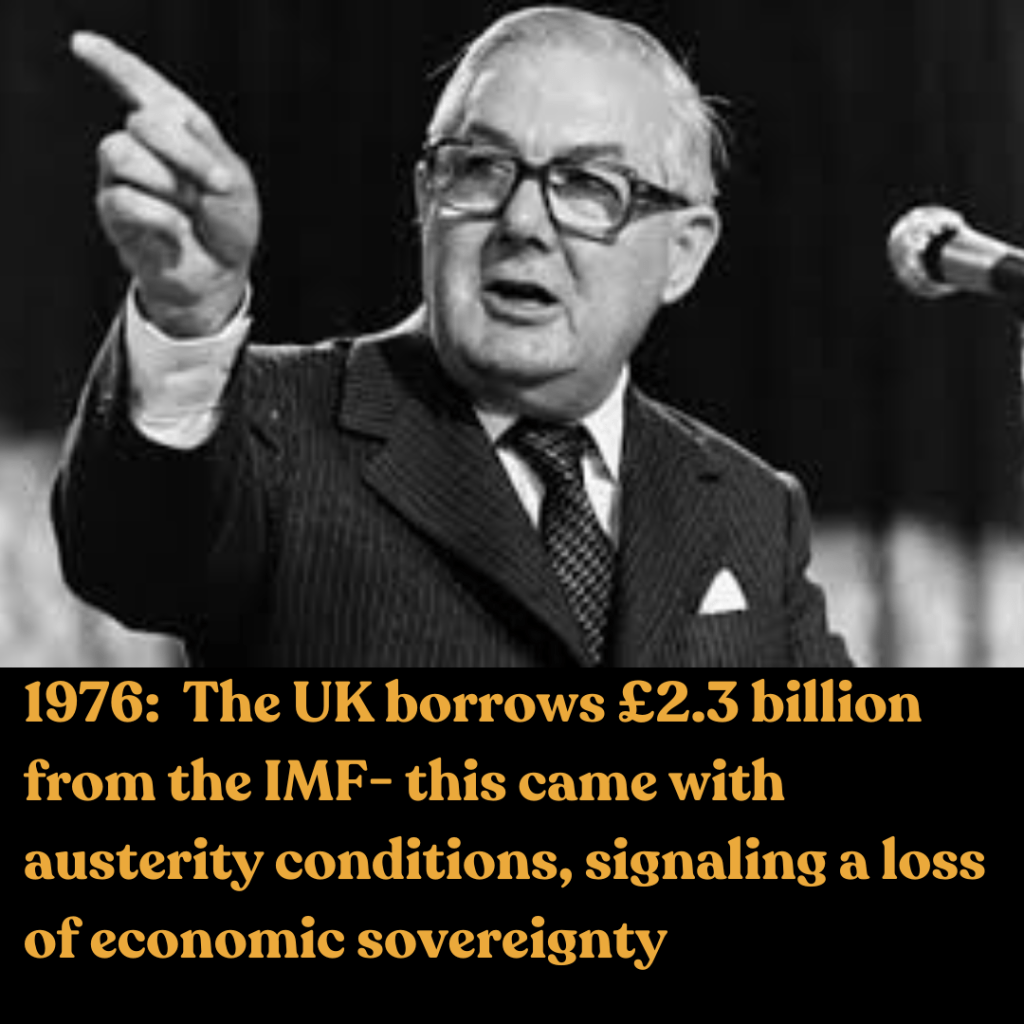
By 1976, Britain faced soaring inflation and collapsing currency values. James Callaghan’s Labour government had to seek a £3.9 billion loan from the IMF, agreeing to spending cuts in return. This symbolised the end of the post-war consensus and the welfare state’s guarantee of prosperity.
The sense of betrayal by government fed into youth cultures. Punks became even more prominent, mocking consumerism and politics with songs, fanzines, and anti-fashion. At the same time, rasta-influenced reggae subcultures among Black youth expressed resistance to both economic marginalisation and racism. These musical styles symbolised anger at being excluded from the supposed benefits of British society.
Late 1970s: Racial Tensions and the Rise of the Far Right
Immigration from the Caribbean, South Asia, and Africa had transformed Britain’s cities, but racism and discrimination were widespread. Police targeted young Black people through “stop and search” powers, while poor housing and unemployment hit minority communities hard.
In 1976, clashes between police and young Black people at the Notting Hill Carnival revealed deep mistrust. The far-right National Front exploited fears about immigration, staging provocative marches. In response, youth subcultures became crucial sites of anti-racist resistance.
- The Rock Against Racism movement brought together punks and reggae musicians in huge concerts, uniting Black and white youth against the far right.
- The Two-Tone movement in the late 1970s fused punk and ska, with bands like The Specials explicitly promoting anti-racist messages.
At the same time, parts of the skinhead movement were drawn into racist politics, showing how subcultures could reflect both resistance and division in society.
1978–79: The “Winter of Discontent”
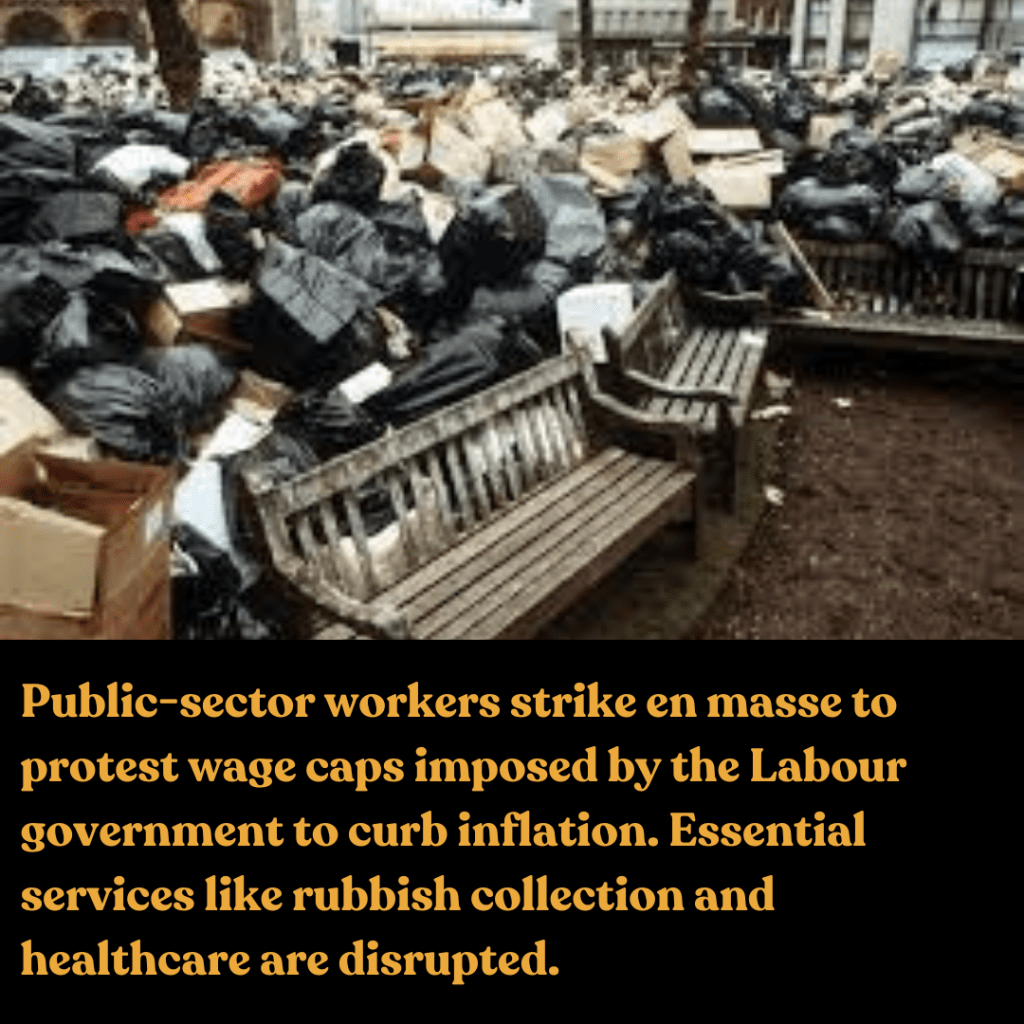
The decade closed with the Winter of Discontent, a wave of strikes in 1978–79 by public sector workers angry at pay limits during high inflation. Images of uncollected rubbish and unburied bodies became symbols of national decline.
For young people, this period intensified the feeling that Britain had “no future.” Punk’s raw, chaotic music and style captured the hopelessness of a generation growing up in a collapsing social order. At the same time, youth unemployment rose, making it harder for working-class youths to achieve traditional markers of adulthood.
The state’s inability to control these crises paved the way for Thatcherism in 1979, which promised to restore order and authority by crushing union power and promoting free-market values.
Conclusion
The 1970s were a period of profound crisis of hegemony in Britain. Industrial disputes, economic collapse, political weakness, violent conflict in Northern Ireland, and racial tensions all eroded the authority of the state.
Youth subcultures reflected and resisted these crises:
- Skinheads defended working-class identity amid industrial decline.
- Punks expressed disillusionment with unemployment, politics, and violence.
- Reggae and Two-Tone cultures voiced resistance to racism and exclusion.
- Mods, rockers, and carnival clashes became symbols of moral panics about law and order.
By the end of the decade, youth cultures were not just about fashion or music — they were active responses to social breakdown, expressing both the anger and creativity of young people living through Britain’s hegemonic crisis. Below is a galley and a video of the main issues in the 1970s in the UK.










 The Sociology Guy