Sociologists have studied youth subcultures to understand how young people respond to issues like class, identity, and social change. Here are some key examples:
- Teddy Boys (1950s): Working-class youths who used Edwardian-style suits to gain status and resist middle-class culture. Jefferson (1976) saw them as expressing class-based resentment during post-war austerity.
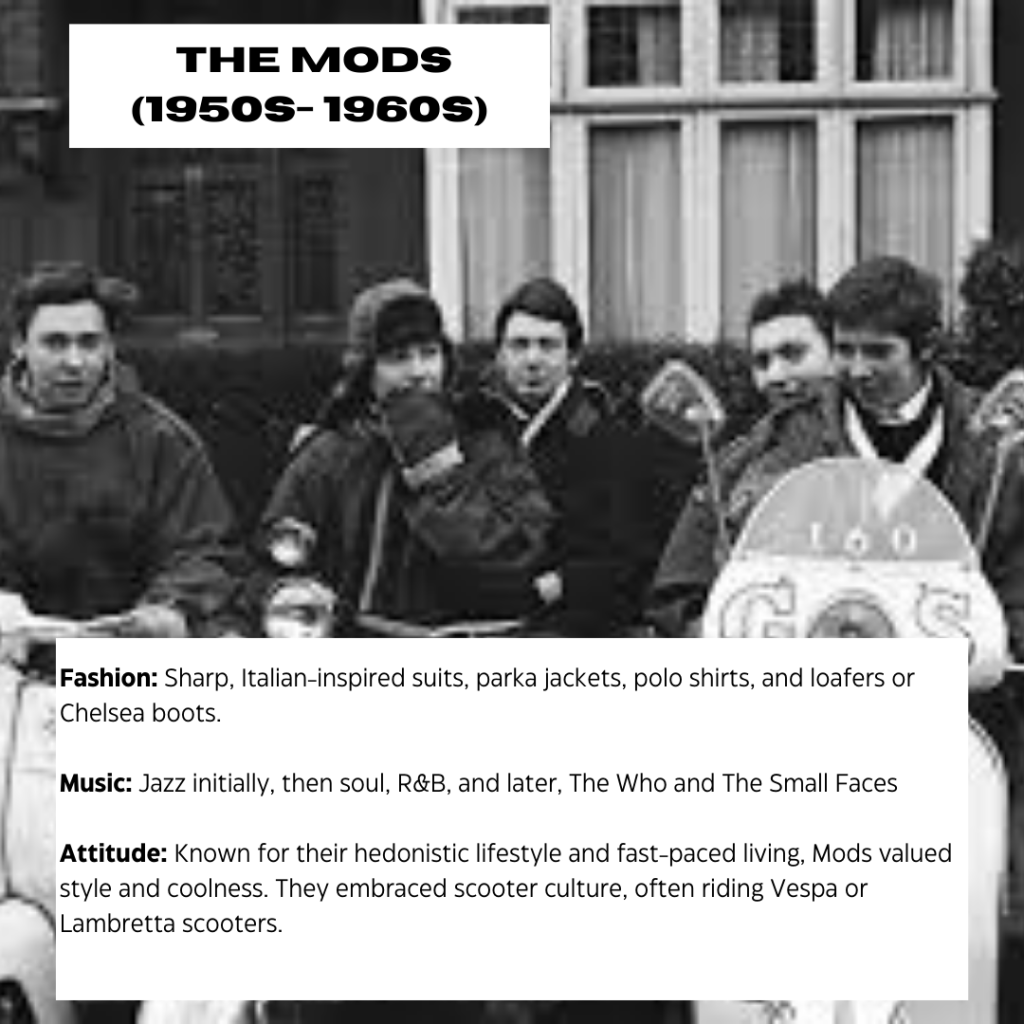
- Mods and Rockers (1960s): Smartly dressed, scooter-riding Mods and the leather-clad Rockers became famous for seaside clashes. Cohen (1972) argued that the media exaggerated these events, creating a moral panic.
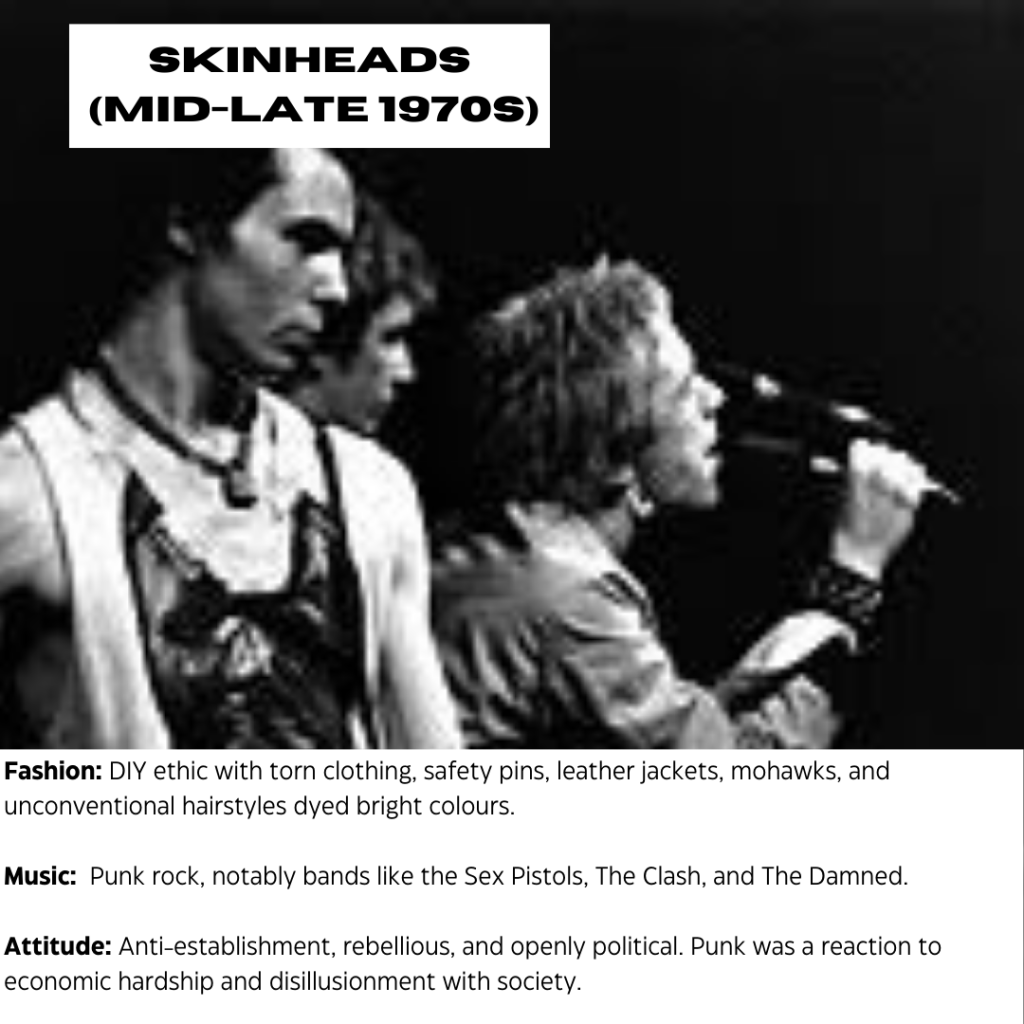
- Skinheads (late 1960s–70s): Linked to working-class identity and masculinity. Clarke (1976) saw them as trying to ‘magically’ recreate lost working-class community traditions, though later skinhead groups became connected to racism.
- Punks (1970s): With ripped clothes, safety pins, and angry music, punks expressed frustration at unemployment and decline. Hebdige (1979) argued their style was a form of resistance through rituals, challenging dominant culture.
- Ravers (late 1980s–90s): Centred on dance music and drugs, raves created a sense of unity and escape. Redhead (1990) suggested rave culture blurred class boundaries, offering temporary freedom from everyday life.
- Goths and Emos (1990s–2000s): These groups embraced alternative styles and music to express individuality and feeling like outsiders. Research by Hodkinson (2002) found goths built a strong, supportive community that often lasted into adulthood.
- Contemporary Subcultures: Online spaces have given rise to new youth groupings, from gamers to TikTok collectives. Muggleton (2000) argued that postmodern subcultures are more fluid and based on lifestyle and choice than rigid class divisions.
Sociologists use these studies to show that youth cultures aren’t just about fashion—they reflect wider struggles over class, identity, resistance, and belonging.
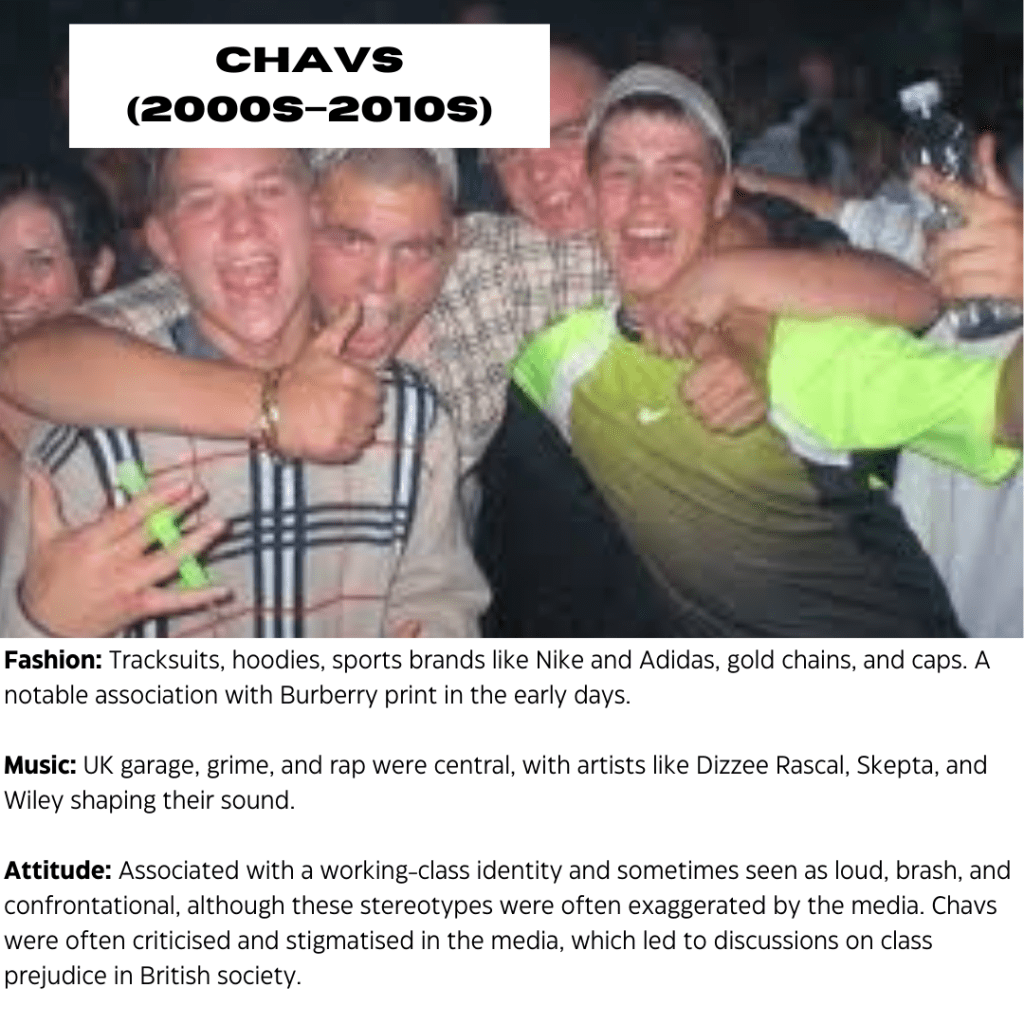
Below are some brief pen pictures of subcultures studied as a starting point for your own research into these subcultures.






Cited Sociological Research on Youth Subcultures
- Teddy Boys – Jefferson, T. (1976) ‘Teddy Boys: A study of youth subculture’ in Hall, S. & Jefferson, T. (eds) Resistance Through Rituals. London: Hutchinson.
- Mods and Rockers – Cohen, S. (1972) Folk Devils and Moral Panics. London: MacGibbon and Kee.
- Skinheads – Clarke, J. (1976) ‘The Skinheads and the Magical Recovery of Community’ in Hall, S. & Jefferson, T. (eds) Resistance Through Rituals. London: Hutchinson.
- Punks – Hebdige, D. (1979) Subculture: The Meaning of Style. London: Routledge.
- Ravers – Redhead, S. (1990) The End-of-the-Century Party: Youth and Pop Towards 2000. Manchester: Manchester University Press.
- Goths – Hodkinson, P. (2002) Goth: Identity, Style and Subculture. Oxford: Berg.
- Postmodern Subcultures – Muggleton, D. (2000) Inside Subculture: The Postmodern Meaning of Style. Oxford: Berg.
 The Sociology Guy