 by
by 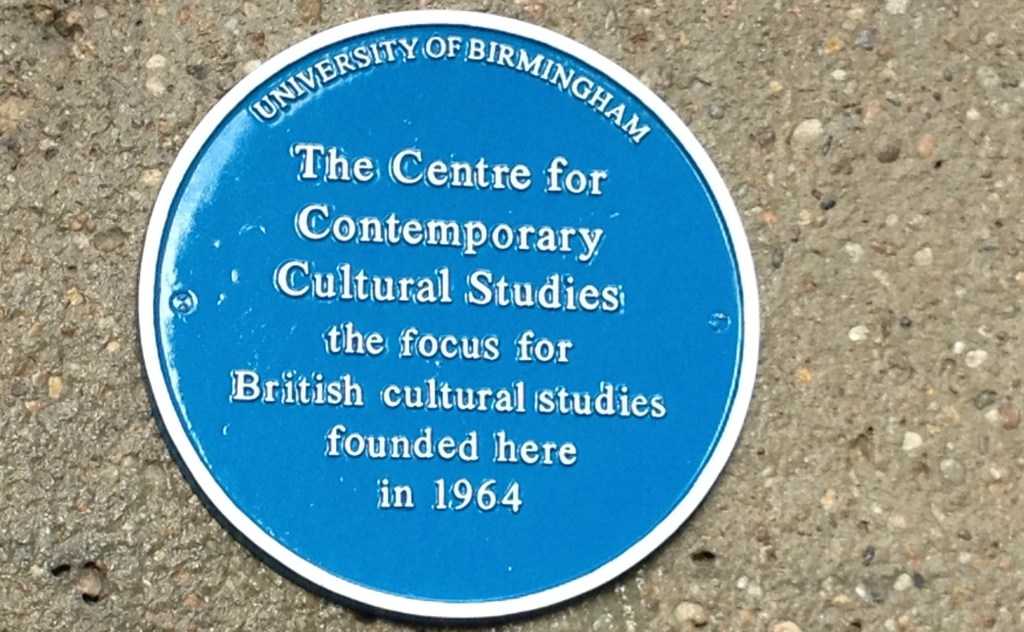
The Centre for Contemporary Cultural Studies at the University of Birmingham
The Centre for Contemporary Cultural Studies (CCCS) at the University of Birmingham was a pioneering institution in the development of cultural studies as an academic discipline. Established in 1964 by Richard Hoggart, the CCCS became a hub for critical inquiry into culture, media, and society, particularly under the directorship of Stuart Hall from 1968 to 1979.
Founding and Early Development
Richard Hoggart, a noted scholar of working-class culture, founded the CCCS to study the everyday lives of ordinary people. His seminal work, The Uses of Literacy (1957), examined how working-class communities engaged with mass media and literature. Hoggart emphasized understanding culture from the perspective of those who live it, rather than through elite or top-down frameworks.
In 1968, Stuart Hall, a Jamaican-born British sociologist and cultural theorist, became director of the Centre. Hall expanded its focus to include race, identity, ideology, and media studies. Under his leadership, the CCCS became a leading force in British cultural studies, combining theoretical insight with empirical research to understand the social and cultural dimensions of contemporary life.
Key Figures and Intellectual Contributions
- Stuart Hall: Hall developed the Centre’s theoretical framework, introducing the “encoding/decoding” model of communication. This model argued that audiences actively interpret media messages, producing meanings that may differ from the intended message, highlighting the complex relationship between media and social context. Hall’s work on race, ethnicity, and cultural identity has had a lasting impact on cultural studies.
- Richard Hoggart: Hoggart emphasized the significance of popular culture and its role in shaping social identities, laying the foundation for the study of everyday culture at Birmingham.
- Dick Hebdige: Hebdige’s Subculture: The Meaning of Style (1979) examined youth subcultures such as punks and mods, analyzing how their style, music, and fashion expressed resistance to dominant social norms. Hebdige’s work highlighted the symbolic and political dimensions of subcultural expression.
- Angela McRobbie: McRobbie contributed to feminist cultural studies at the CCCS. She analyzed the representation of women in media, fashion, and youth culture, showing how gender intersects with culture and power. Her work helped shape the feminist turn in cultural studies.
- Lesley Jefferson: Jefferson conducted research into youth culture and leisure, exploring the ways young people create identities and negotiate social constraints. Her studies contributed to the CCCS’s understanding of everyday practices and subcultural formations.
- Tony Brake: Brake examined British youth subcultures in the 1970s, focusing on how working-class youth navigated and resisted societal pressures. His work emphasized the role of leisure and style in shaping identity and community.
- John F. Bennett: Bennett focused on social structures and community studies, providing detailed sociological insight into working-class life in urban Britain, complementing the CCCS’s focus on subculture and media.
- Paul Willis: Willis’ Learning to Labour (1977) studied working-class boys in schools and how their counter-school culture both resisted and reproduced social inequality. Willis combined ethnographic methods with Marxist theory, demonstrating the complex relationship between education, culture, and class.
- David Morley: Morley’s research on television audiences, particularly The Nationwide Project, revealed that media is interpreted differently by different social groups, showing that audiences are active participants in cultural consumption.
- Ann Gray and Michael Green: These scholars explored regional cultures and media practices, with Gray focusing on cultural policy and Green examining the social lives of communities in the English Midlands.
Fields of Study and Notable Research
The CCCS was at the forefront of multiple areas within cultural studies:
- Youth Subcultures: Researchers such as Hebdige, Brake, Jefferson, and Willis examined youth groups, showing how style, music, and leisure practices expressed resistance to dominant culture. This work emphasized the creativity and agency of young people in negotiating societal pressures.
- Race and Ethnicity: Hall and colleagues explored the intersections of culture, race, and identity, highlighting marginalized voices and challenging dominant narratives. Research like The Empire Strikes Back (1982) analyzed postcolonial identities and racism in Britain.
- Media and Ideology: The CCCS examined how media both reflects and reproduces social power structures. Hall’s encoding/decoding model and Morley’s audience studies showed that media interpretation is socially situated and that audiences negotiate meaning actively.
- Feminist Cultural Studies: Angela McRobbie and others critiqued traditional gender roles, examining how popular culture, media, and fashion reinforce inequalities while also offering spaces for resistance.
- Education and Class: Paul Willis’ ethnographic work revealed how schooling reproduces social inequalities while simultaneously providing room for cultural resistance through counter-school subcultures.
- Community and Social Life: Scholars like John F. Bennett and Michael Green studied working-class communities to understand how culture, leisure, and local identity intersected with broader societal structures.
Notable publications include:
- Resistance through Rituals (1976): Analysis of youth subcultures and their forms of resistance.
- Policing the Crisis (1978): Examination of moral panic around “mugging” and social control.
- Subculture: The Meaning of Style (1979): Hebdige’s influential study of youth subcultures.
- Learning to Labour (1977): Willis’ ethnography on working-class boys and schooling.
- The Empire Strikes Back (1982): Analysis of race, postcolonial identity, and cultural politics in Britain.
Legacy and Influence
The CCCS’s interdisciplinary approach and commitment to social justice left a profound legacy in academia. Its work continues to influence sociology, media studies, postcolonial studies, feminist studies, and youth studies. The Centre encouraged critical thinking about culture, power, and resistance, emphasizing how ordinary people actively engage with the social world.
In 2002, the University of Birmingham closed the Department of Cultural Studies and Sociology, which had evolved from the CCCS. The intellectual legacy of the Centre was preserved through archives at the Cadbury Research Library, which hold publications, correspondence, and research papers from the CCCS.
Conclusion
The Centre for Contemporary Cultural Studies at the University of Birmingham played a transformative role in shaping cultural studies. Through the work of scholars like Stuart Hall, Dick Hebdige, Angela McRobbie, Paul Willis, Lesley Jefferson, Tony Brake, and John F. Bennett, the CCCS developed new ways of understanding culture, media, subcultures, identity, and power. Its research revealed the active role of individuals and groups in negotiating social norms and resisting inequalities, leaving an enduring impact on sociology and the social sciences.
 The Sociology Guy
Women Take Issue
Aspects of Women’s Subordination
Edited By CCCS
Edition1st Edition
First Published1978
eBook Published16 December 2013
Pub. LocationLondon
ImprintRoutledge
DOIhttps://doi.org/10.4324/9780203709405
Pages216
LikeLike