Weber, Max. (1904–1905). The Protestant Ethic and the Spirit of Capitalism

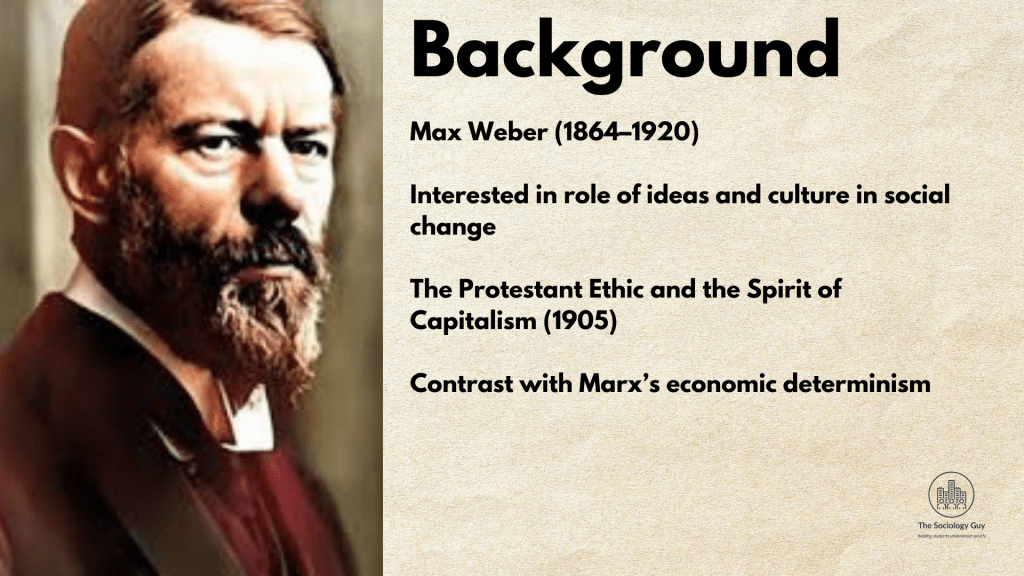
In this key study, Weber sought to explain why modern capitalism first emerged in Western Europe, rather than in other civilisations with similar economic and technological developments. His central argument is that a specific set of religious beliefs, namely those of ascetic Protestantism (especially Calvinism), provided the cultural and ideological conditions necessary for the rise of capitalism.
Key concepts:
- The spirit of capitalism: A new mindset that saw the relentless pursuit of profit and its reinvestment as a moral and virtuous activity, rather than as a vice.
- The Protestant work ethic: A new attitude towards work emerging from Calvinist theology.
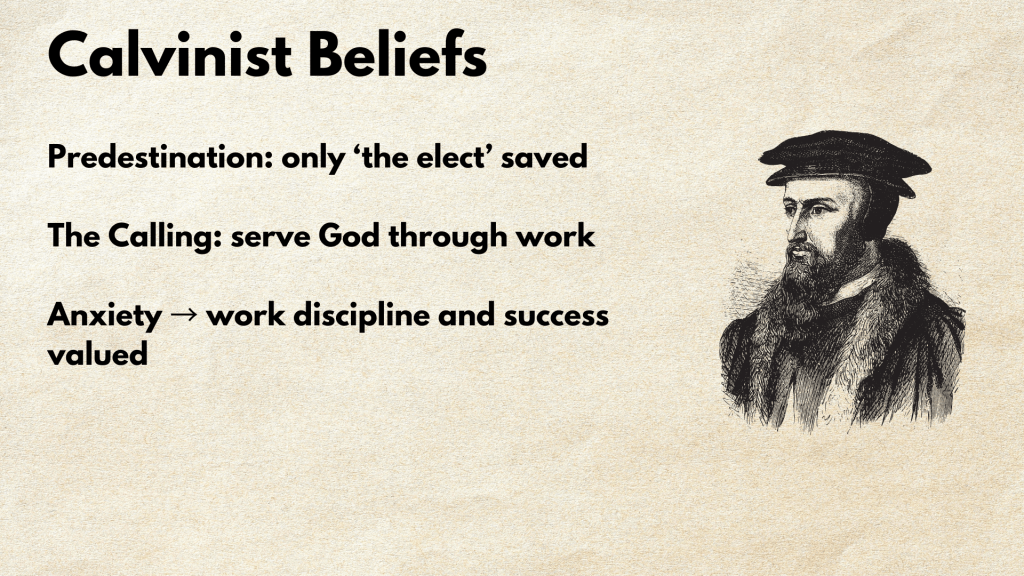
- Calling (or Beruf): Calvinists believed God had a ‘calling’ for each person, and work in a secular occupation was a way of serving God. This elevated mundane labour to a spiritual duty.
- Predestination: The belief that God has already chosen who is to be saved (the ‘elect’) and who is to be damned. This created a ‘salvation panic’ among Calvinists, who looked for signs of being among the elect.
- Inner-worldly asceticism: A lifestyle of hard work, self-discipline, and frugality. Calvinists did not spend their money on luxuries or worldly pleasures, but instead reinvested it back into their businesses. This success was seen as a sign of God’s favour and proof of being part of the elect.
- Rationalisation and disenchantment: Over time, the rational, systematic mindset promoted by the Protestant ethic became detached from its religious roots. Modern capitalism, for Weber, no longer needs religion to function. Instead, individuals are trapped in an ‘iron cage’ of rational, bureaucratic systems that compel them to work and consume, stripping away tradition and emotion from modern life.
Applications to OCR and AQA Specification
- Beliefs in Society: Weber provides a cultural explanation of social change, contrasting with Marx’s economic determinism. Religion is not just conservative – it can be a force for radical change.
- Socialisation and Culture: Demonstrates how ideas and values shape people’s behaviour and wider structures.
- Theory and Methods: Illustrates Weber’s focus on verstehen (understanding meaning from actors’ perspectives).
- Social Change: Links to debates on whether ideas or economic structures drive change.
You can download a PPT and discussion questions on the work of Weber from the link below:




You can also hear my commentary on Weber for Tutor2u on their YouTube Channel or by clicking video below.
 The Sociology Guy